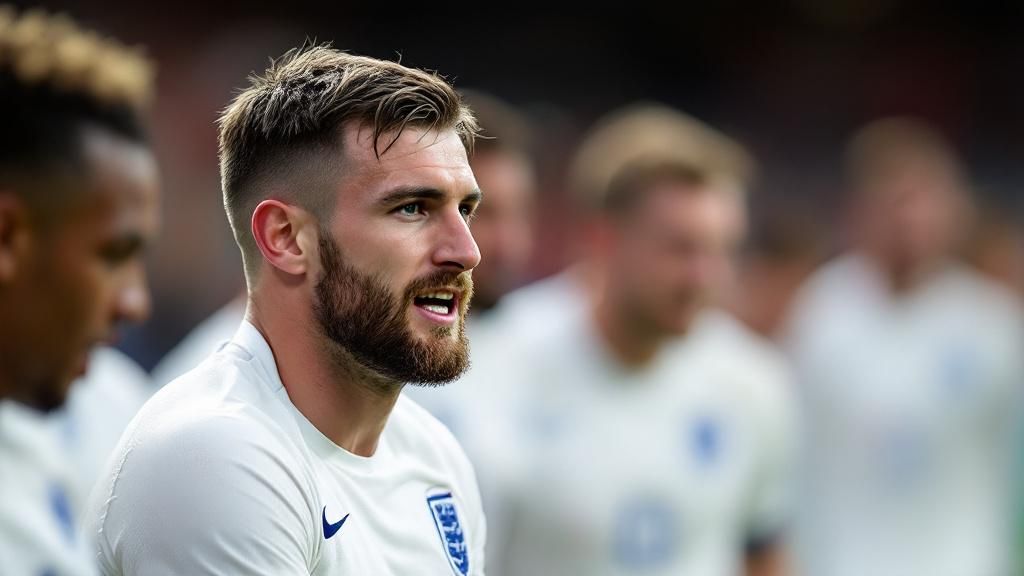
As England’s national football team sets its sights on upcoming world competitions, the Football Association has placed squad development at the forefront of its long-term planning. Rather than depending exclusively on established stars, the Three Lions are committing significant resources to developing young players and establishing strong team cohesion equipped for sustained success on the world stage. This article examines how focused talent development, tactical innovation, and youth integration are redefining England’s strategy in competitive football.
Player Development Strategy Framework
The Football Association has created a comprehensive player development framework created to recognise and nurture talent throughout all age brackets. This structured approach includes stringent talent discovery schemes, bespoke coaching programmes, and organised progression tracks from grassroots level through to elite international competition. By adopting data-informed training approaches and analytical insights, the FA secures that emerging talent receive maximum developmental backing. This framework marks a major change towards long-term planning, focusing on sustainable excellence over quick wins and establishing England as a focal point for world-class player development.
Central to this framework is the integration of academy systems with international squad requirements. Clubs and the national team work together to ensure young players comprehend the technical challenges and conditioning standards of elite international football. Ongoing feedback processes and progress evaluations guide players’ progression, whilst targeted mentoring from veteran players accelerates their development. This collaborative ecosystem fosters determination, playing ability, and emotional resilience—qualities vital to thriving in intense international competitions. The framework ultimately aims to create a steady stream of skilled players prepared to represent England at the elite standard.
Funding of sports science and medical infrastructure underpins the entire development process. Strength and conditioning specialists, Performance psychologists, and dietary specialists work alongside coaches to enhance player performance and lower injury likelihood. In-depth performance tracking monitor individual development, identifying areas for enhancement and shaping tailored coaching schedules. This integrated team structure confirms that players mature in a balanced way, covering physical, technical, tactical, and cognitive elements of their performance. By integrating modern scientific approaches with established coaching principles, England fully realises the potential of its emerging talent pool.
The framework also underscores leadership qualities and cultural development alongside footballing ability. Young players are encouraged to embrace responsibility, maintain composure through adversity, and play a constructive role in squad dynamics. Leadership academies and mentoring programmes embed the standards needed for representing England with distinction. This holistic approach acknowledges that international success requires more than technical proficiency—it calls for character, commitment, and a shared focus on collective goals. By nurturing these attributes from the outset, the FA prepares players capable of managing the particular challenges of international football.
Youth Inclusion and Skills Pipeline
The Football Association acknowledges that sustained international success requires a robust youth development framework. By integrating promising young players into the senior squad earlier|sooner|at an earlier stage, England aims to build experience and cohesion amongst its emerging talents. This strategic approach ensures a continuous pipeline of quality players ready to compete at the highest level, whilst maintaining competitive depth across all positions.
Community to Elite Journey
England’s grassroots football system creates the backbone of the national talent pipeline. Funding for academy programmes and junior training hubs has increased substantially, with clubs and the FA working together to recognise and cultivate talented youngsters from childhood. This systematic framework ensures that talented players receive elite-level instruction and match experience, readying them for the professional game and potential senior international selection.
The pathway from grassroots to elite-level sport has become more complex, utilising statistical analysis and ongoing assessment. Coaching staff and talent scouts utilise advanced assessment techniques to identify talent possessing the skill set, physical capabilities, and mental resilience required for top-tier sport. This detailed evaluation system confirms only the highest-potential players progress through the system, increasing the probability of sustained competitive achievement.
- Academy partnerships strengthen player discovery and development programmes
- Regular player evaluations monitor progress against top-level standards
- Competitive junior competitions offer realistic match experience and visibility
- Coaching education programmes ensure uniform excellent instruction nationwide
- International junior tournaments build experience in demanding competitive environments
Competition Readiness and Performance Targets
England’s planning approach for forthcoming international competitions emphasises a middle ground between sustaining competitive performance and enabling long-term player growth. The coaching staff have established clear performance targets that prioritise not only securing wins but also appraising younger players in match conditions. This methodology allows the Football Association to evaluate how developing squad players handle competitive demands whilst maintaining the team’s competitive standards. By integrating development objectives with current performance objectives, England generates scope for talent appraisal without compromising tournament ambitions.
The Three Lions have established thorough performance indicators to track both player-by-player advancement and collective team development. These goals go further than traditional win-loss records to include tactical implementation, quality of possession, and defensive structure. Managers utilise competitive matches as developmental opportunities, rotating players methodically to build experience across the whole group. This strategic approach ensures that competitive play serves dual purposes: obtaining positive results whilst simultaneously identifying which emerging talents demonstrate the resilience and capacity required for sustained success at international level at the elite level.
